Simulation-Free Radiation Therapy: Feasibility, Requirements, and Clinical Potential
Delivering radiation therapy requires precise planning to obtain a certain dose of radiation in a specified volume within a patient’s…
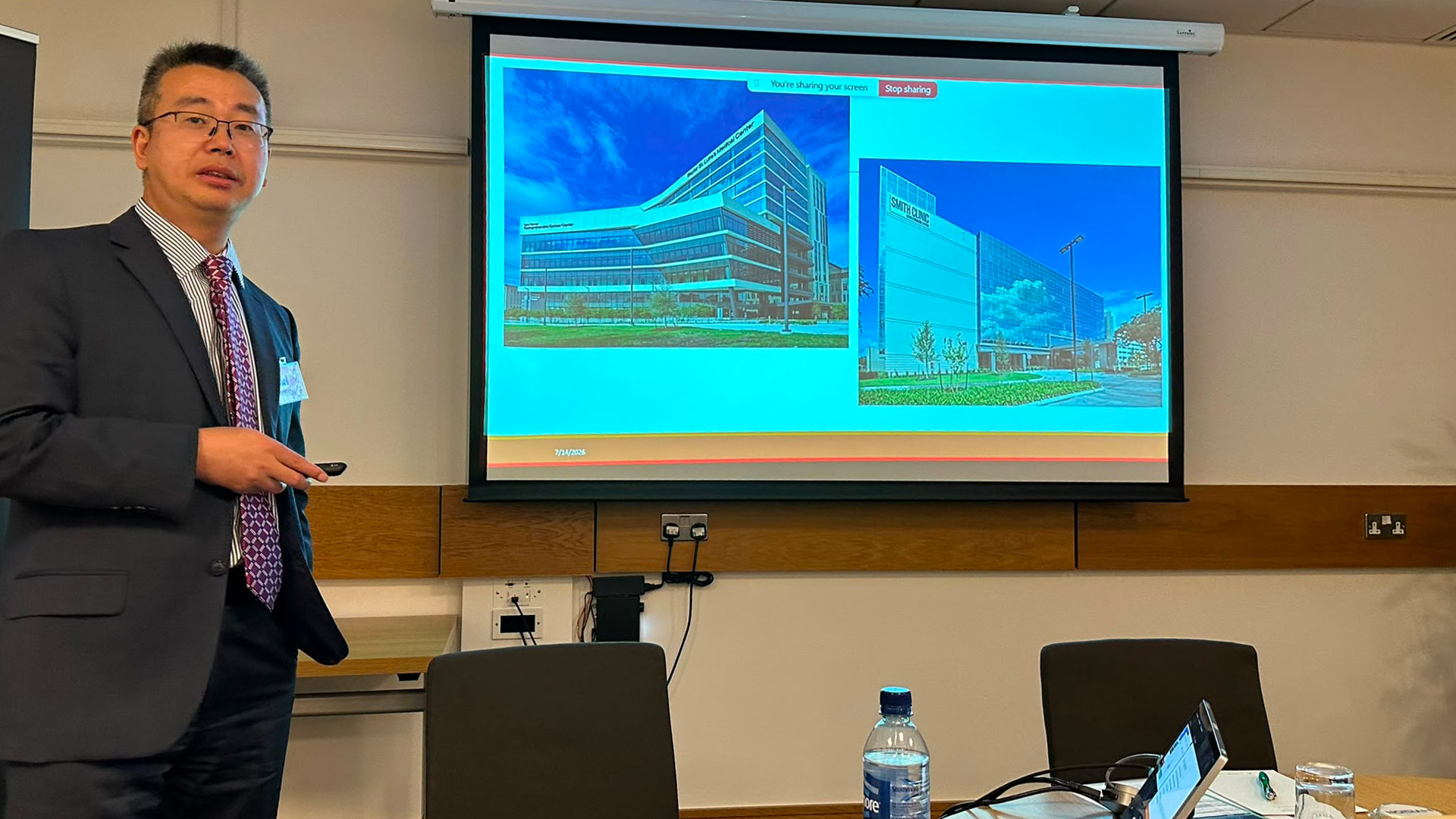
Could you introduce Baylor College of Medicine’s Department of Radiation Oncology and your role there?
The Department of Radiation Oncology at Baylor College of Medicine is an academic programme combining clinical services, education and research. Our research is mainly focused on AI integration in radiation oncology, informatics and data science.
My role is as a Professor and Associate Chair, and Director of the Medical Physics Residency Program. I oversee clinical physics operations, direct the education programme, and am also in charge of the evaluation and adoption of new technologies, including AI tools, in our department.
Your presentation at the MVision AI / Xiel User Group was titled “From Automation to Education.” What were the key takeaways you wanted the audience to leave with?
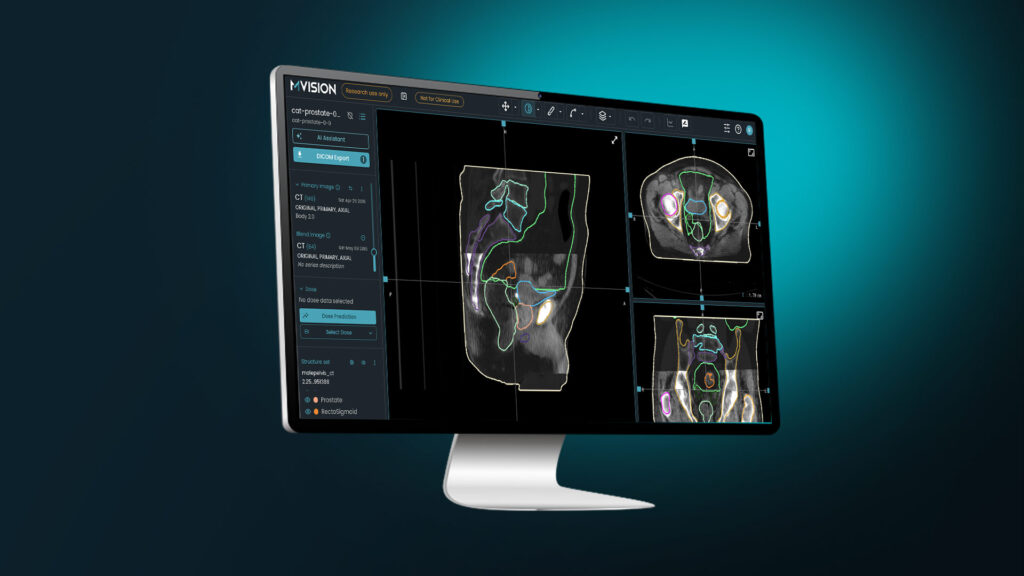
If there is one thing I want people to walk away with, it is that MVision AI is not offering a single-point solution. It’s a full spectrum of AI tools that together can support the entire AI workflow.
The quality we evaluated is highly consistent from module to module and case to case. This is very important because, at some point, we have to trust the AI. If the quality is not consistent, then the question becomes: how can I trust the AI to do the work instead of doing it ourselves?
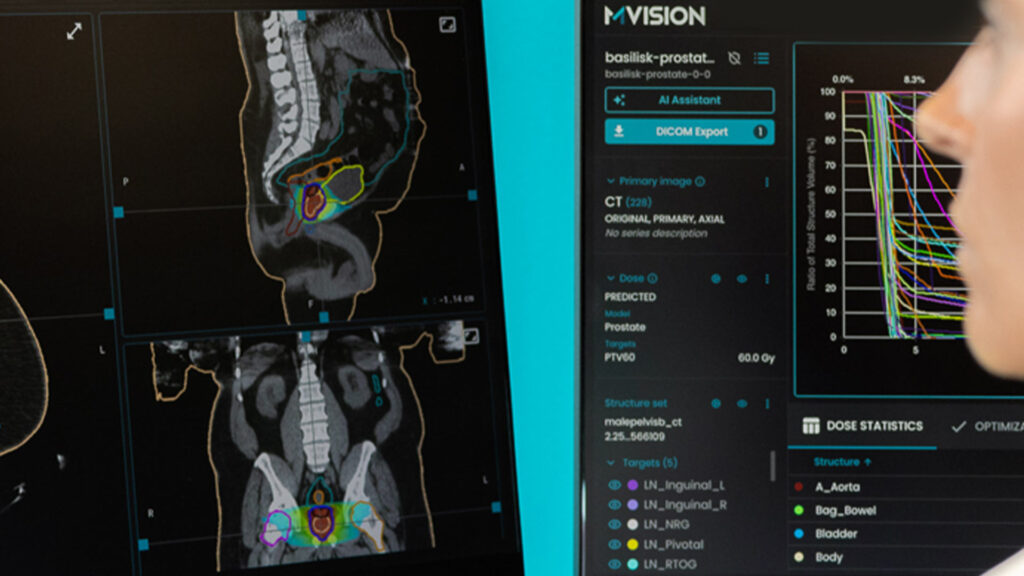
Also, the efficiency improvement is huge, not marginal. I have seen that. A few factors in point: auto segmentation and treatment plan optimisation.
Lastly, I wanted to point the audience towards the future, rather than just where we are today. Currently, AI in this area is largely based on model-based deep learning, but I think that, in the future, generative AI and AI agents will play a very important role in radiation oncology.
How has working with MVision AI changed the way you train the next generation of medical physicists?
During our evaluation of the MVision AI tools, our residents did most of the work under my supervision, so they gained hands-on exposure to AI in radiation oncology. I think that is a very important experience. They learn about the application of AI in a practical setting.
Moving forward, I plan to integrate AI education into our didactic teaching, covering areas such as basic modelling, applications, training and validation. From a quality assurance perspective, I think this is very important.
What does a successful AI-driven radiotherapy workflow actually look like in practice — and how far is the field from achieving it routinely?
I would say a successful, or ideal, AI-driven radiotherapy workflow should be seamless and hands-off across contouring, planning, adaptive therapy and verification, with AI involved at each step. However, clinician sign-off — from the physicist and physician — would remain the final gate for the AI. Ensuring that trust is built through verification of the AI is key. I think that would be the ideal, successful AI-driven workflow.
How far are we from that? I would say the routine, reliable use of individual modules — for example, auto-segmentation — is close to mature. But fully closed-loop adaptive workflows are not there yet.
I believe that will be the future: AI doing the majority of the work at every step, creating a smooth, integrated workflow.
How do you balance the rigour of clinical research validation with the practical pressure to deploy AI tools quickly for patient benefit?
I would say clinical validation and deployment are not sequential; they are more iterative, or happen in parallel.
Validation is very important. As medical physicists, we have to make sure that the tools or software introduced into clinical practice are safe. Introducing AI applications into radiation oncology should be approached in the same way as introducing other software: before bringing it into clinical practice, we need to make sure full validation has been completed and that it is safe.
For departments earlier in their AI journey, what would you say to those weighing whether to invest in AI-driven workflow automation?
I have several suggestions for departments that are at an early stage of adopting AI. In the beginning, it may seem a little scary, but start with a well-defined scope and a small project — segmentation, for example, or even a small group of patients, such as head and neck cases. Start there first, then gradually deploy AI across a larger and more comprehensive scope.
Take it one step at a time, and invest in physicists and at the same time in validation upfront. That investment pays back in the future through greater trust and efficiency.
Also, treat the vendor as a collaborative partner, not simply as a vendor. Meetings like this User Group allow us to learn from each other, and we can also learn from the vendor because they work with many customers and encounter many different issues. Working collaboratively with the vendor and learning from their experience is very important when implementing AI solutions in radiation oncology.
About Baylor College of Medicine’s Department of Radiation Oncology
The Department of Radiation Oncology at Baylor College of Medicine is based in the Texas Medical Center in Houston, the world’s largest medical complex, and forms part of the Dan L Duncan Comprehensive Cancer Center. The department delivers a broad range of treatment options, including stereotactic radiosurgery, CyberKnife, IMRT, IGRT, 3D-conformal therapy, and brachytherapy, across clinical sites including Baylor St. Luke’s Medical Center, Ben Taub Hospital, and the Michael E. DeBakey VA Medical Center. As an academic program, the department combines high-volume clinical care with research and training, including four-year radiation oncology and medical physics residency programs, and has an active research focus on AI integration, informatics, and data science in radiation oncology.