Cancer care and radiotherapy in the UK sit at a crossroads. The NHS treats hundreds of thousands of new cancer patients each year, underpinned by a universal healthcare system that guarantees access regardless of ability to pay. Yet persistent workforce shortages, ageing equipment, and long waiting times have left outcomes lagging behind comparable countries.
A National Cancer Plan for England was published in February 2026, and significant investment in new radiotherapy machines is under way, so the system is showing signs of intent. However, closing the gap with the best-performing nations will take sustained effort over many years.
The cancer burden in the UK
Cancer is one of the leading causes of death in the UK. According to Cancer Research UK, there are more than 400,000 new cancer cases each year, with around 170,000 deaths annually (1). Around one in two people in the UK will be diagnosed with cancer during their lifetime (2).
The most common cancers in women are breast, lung and colorectal cancer, which together account for more than half of female diagnoses. In men, prostate, colorectal and lung cancer dominate (3). Incidence rates have increased only modestly in recent years, though an ageing population means absolute case numbers continue to rise. Cancer Research UK projects more than 505,000 new cases per year by the late 2030s (1).
Survival has improved considerably over recent decades. Around half of patients now survive ten years or more, compared to around one in four in the 1970s (1, 4). However, the UK continues to underperform internationally on survival for several common cancer types, including bowel, lung and pancreatic cancer, when compared with similar high-income countries (5).
Radiotherapy: role and reach
Radiotherapy is a central pillar of cancer treatment in the UK. Around 120,000 patients benefit from it each year, and it is estimated to contribute to four in ten cancer cures — more than chemotherapy and other drug treatments (6).
Despite this, studies comparing the UK with other countries have found that patients here receive radiotherapy less often than in comparable nations, and are more likely to wait longer to begin it. Countries with higher radiotherapy use and shorter waiting times, such as Norway and Australia, tend to achieve better survival outcomes for equivalent cancer stages (7).
This national picture sits alongside pockets of genuine strength. The UK has a strong tradition of radiotherapy research and clinical innovation. British centres have been early adopters of advanced treatment techniques and have led and participated in national and international trials that have shaped radiotherapy practice globally.
Waiting times and access
Cancer waiting times in England have been a persistent concern. The NHS target is for 85% of patients to begin treatment within 62 days of an urgent referral. This standard has not been consistently met in recent years. In late 2024, around 67% of patients met the 62-day target, meaning thousands were waiting more than two months to begin treatment (8).
Within radiotherapy specifically, performance against the 31-day decision-to-treat standard has also fallen short: in mid-2024, only around 88% of patients started radiotherapy within 31 days of a decision to treat, against a target of 96% (9). The Royal College of Radiologists (RCR) has consistently attributed these delays to staffing shortages rather than patient demand alone.
There are signs of improvement. Between July 2024 and January 2025, 80,000 more patients had cancer diagnosed or ruled out within 28 days compared to the previous year, following increased NHS investment and extended opening hours at diagnostic centres (10). Community diagnostic centres — of which there are now 170 across England — are playing an increasing role in bringing tests closer to patients (10).
Waiting times for cancer diagnosis and treatment have also decreased in Scotland, Wales and Northern Ireland in recent years, with performance against national targets at or near record lows in 2023 and 2024 before showing some partial improvement (4).
Workforce and equipment pressures
The most pressing challenge underlying these delays is workforce capacity. The RCR 2024 census found a 29% shortfall of clinical radiologists and a 15% shortfall of clinical oncologists nationally, with some regions facing larger gaps — Wales, for instance, had a 32% radiologist shortfall (11). Without action, those figures are projected to worsen to 39% and 19% respectively by 2029 (11).
Demand is growing faster than the workforce. In 2024, the number of CT and MRI scans performed rose by around 8%, while the radiology consultant workforce grew by only 4.2% (11). Nine in ten cancer centre heads of service reported that patients were experiencing delays in starting radiotherapy or systemic treatment as a direct result of staffing shortages (11).
Equipment is also a concern. Many NHS radiotherapy linacs are more than a decade old. In May 2025, the government announced a £70 million investment to install new linear accelerators at 28 hospitals across England, prioritising sites with the most outdated machines. The upgrade is expected to save an estimated 13,000 appointments annually that are currently lost to equipment breakdowns (12).
Technology and innovation
The UK has a strong track record in radiotherapy research and clinical trials. The NHS uses advanced techniques including intensity-modulated radiotherapy (IMRT), volumetric-modulated arc therapy (VMAT), and stereotactic ablative body radiotherapy (SABR). MR-linac technology, which allows real-time imaging during treatment, is available at several leading centres.
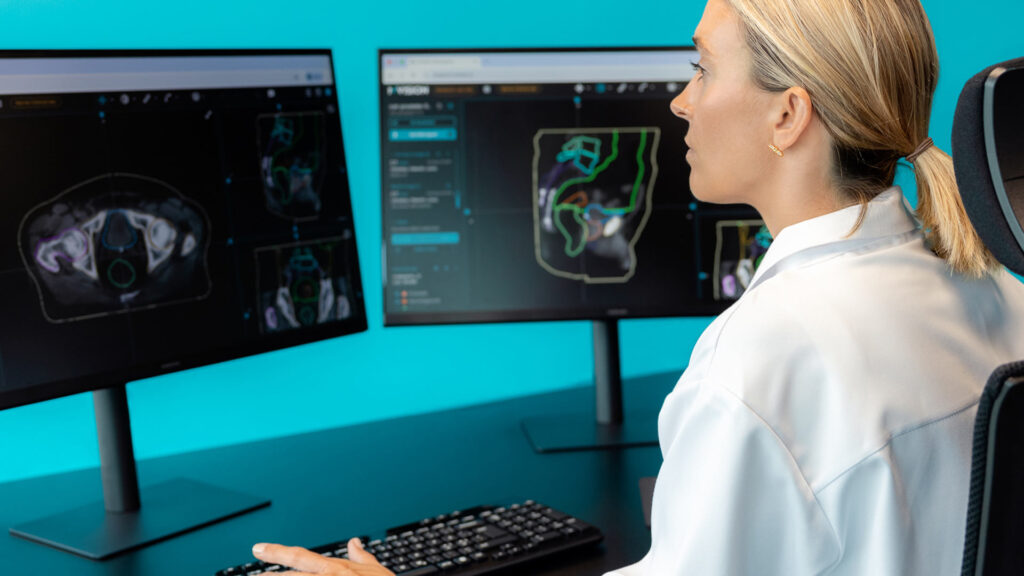
The National Cancer Plan signals an intent to accelerate the use of AI across cancer pathways, including AI-assisted pathology for breast and prostate cancer and ambient voice technology to reduce administrative burden on clinical staff (13). Several NHS trusts have begun piloting AI-based tools to support treatment planning and contouring, areas where demand consistently outpaces clinical capacity.
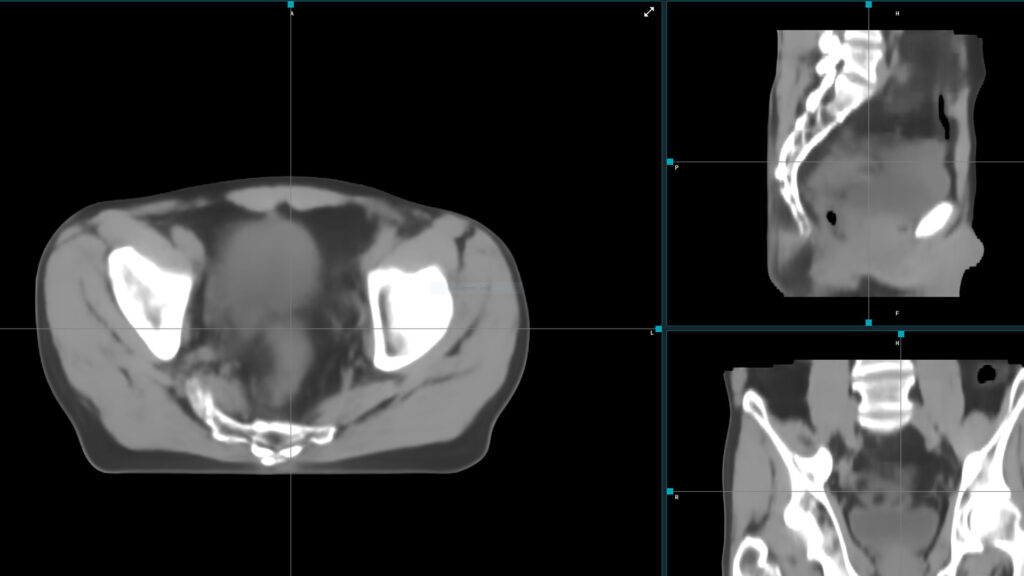
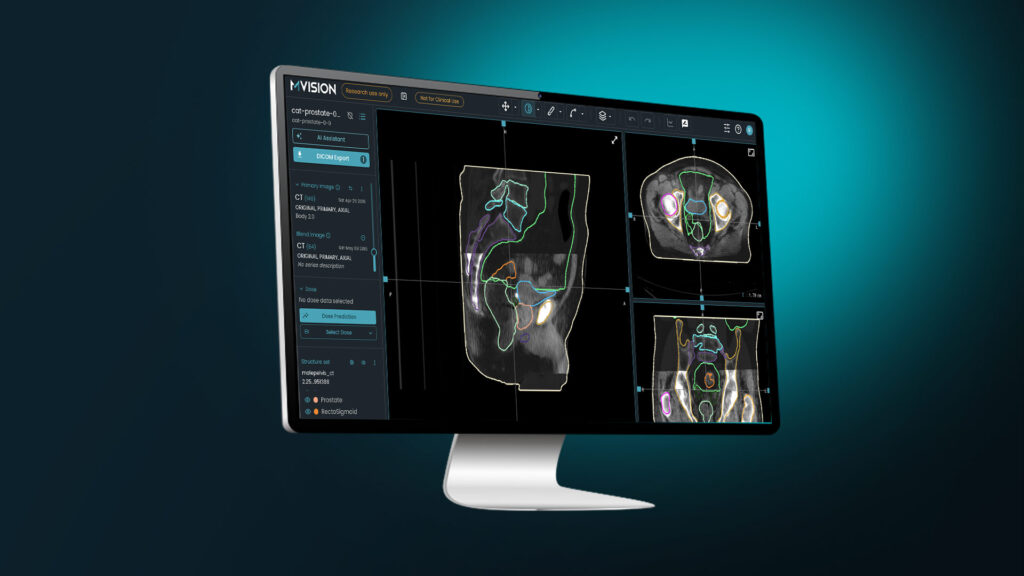
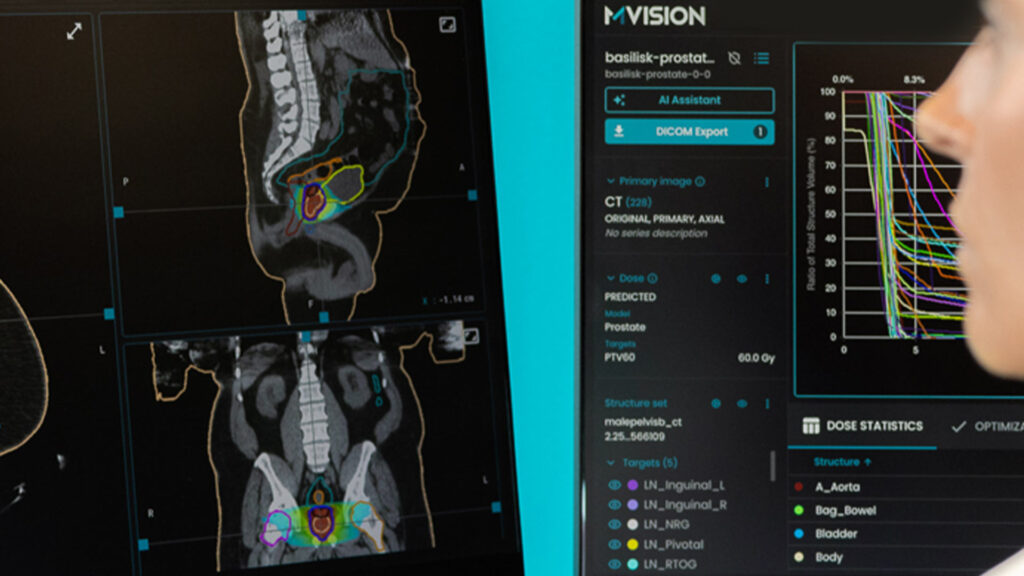
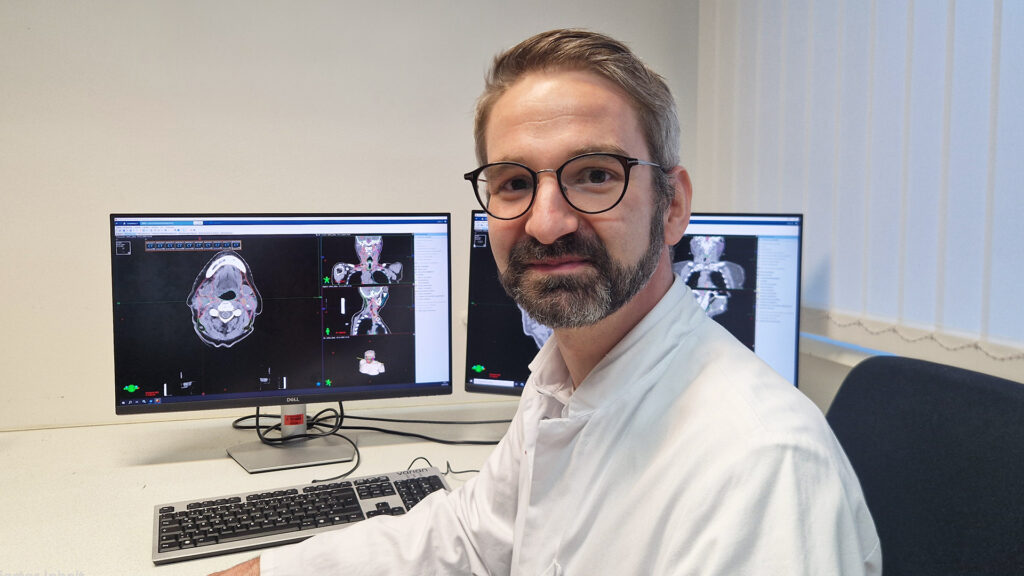
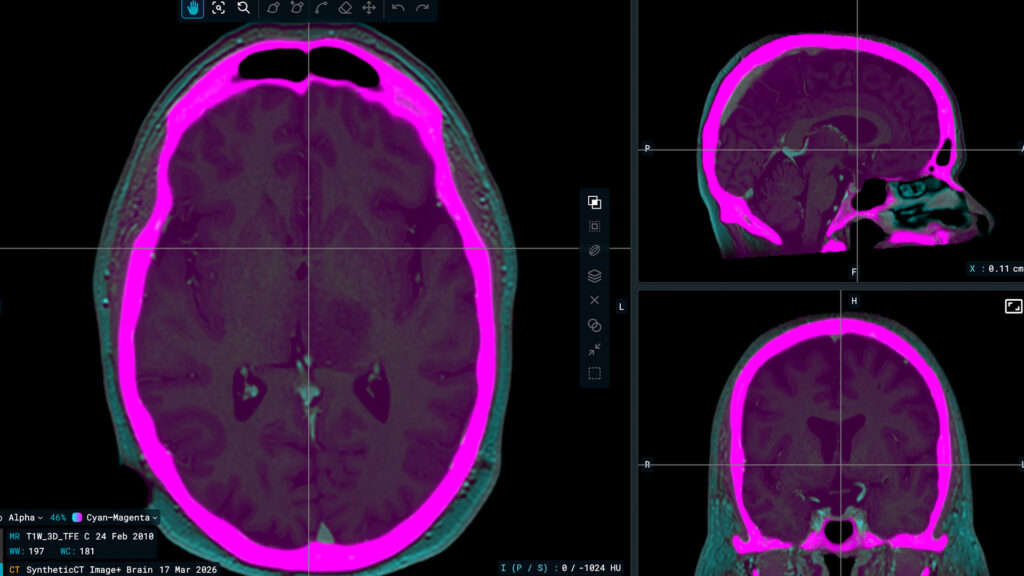
MVision AI’s solutions, for example, have been adopted by over thirty UK radiotherapy departments since their introduction in November 2021. Its Segmentation Service has been recommended by NICE for use within the NHS to aid contouring for radiotherapy treatment planning (14). Beyond contouring, MVision’s AI-powered solutions for radiotherapy treatment preparation also cover dose prediction, synthetic imaging and contour propagation (15).
The National Cancer Plan and the road ahead
The National Cancer Plan sets an ambitious ten-year agenda — the first dedicated cancer strategy since 2015. It aims for three in four people diagnosed with cancer to be cancer-free or living well five years after diagnosis by 2035, and for England to become a global leader in cancer patient outcomes (13). It commits to meeting all cancer waiting time standards by March 2029, expanding early diagnosis, modernising radiotherapy infrastructure, and embedding AI and digital tools across cancer pathways. It also sets an ambition for 75% of cancers to be diagnosed at stage one or two by 2035 — building on an earlier NHS Long Term Plan target and reflecting the persistent problem of late-stage diagnosis in the UK (13).
Initial reactions to the England plan have been broadly positive, though cancer organisations including Cancer Research UK and The Lancet Oncology have noted that workforce constraints and the absence of detailed implementation funding cast uncertainty over some of its more ambitious targets (16).
Cancer care and radiotherapy in the UK are at an inflection point. The challenges are substantial — a workforce in shortage, outcomes that still trail the international best, and a system under pressure from rising demand and years of under-investment. But the strategic intent, the new equipment funding, and the growing role of technology offer a more credible path forward than the country has had for some time.
References
- Cancer Research UK. All cancers combined incidence statistics. Available at: https://www.cancerresearchuk.org/health-professional/cancer-statistics/incidence/all-cancers-combined [Accessed May 2026]
- World Cancer Research Fund. UK cancer statistics. Available at: https://www.wcrf.org/preventing-cancer/cancer-statistics/uk-cancer-statistics/ [Accessed May 2026]
- House of Commons Library. Cancer statistics for England (Research Briefing SN06887). December 2024. Available at: https://commonslibrary.parliament.uk/research-briefings/sn06887/
- Macmillan Cancer Support. Cancer statistics fact sheet. Updated February 2026. Available at: https://www.macmillan.org.uk/about-us/what-we-do/research/cancer-statistics-fact-sheet
- Arnold M, Rutherford MJ, Bardot A, Ferlay J, Andersson TM-L, Myklebust TÅ, et al. Progress in cancer survival, mortality, and incidence in seven high-income countries 1995–2014 (ICBP SURVMARK-2): a population-based study. Lancet Oncology. 2019;20(11):1493-1505. https://pubmed.ncbi.nlm.nih.gov/31521509/
- Cancer Research UK. MPs’ briefing on radiotherapy. Available at: https://www.sor.org/getmedia/cd606db0-5ca4-4267-94b0-58c7a05e9b92/_Research_UK_MPs____Briefing_on_Radiotherapy.pdf
- Cancer Research UK. How does UK cancer treatment measure up to other countries? February 2024. Available at: https://news.cancerresearchuk.org/2024/02/27/how-does-cancer-treatment-in-the-uk-measure-up/
- Nuffield Trust. Cancer waiting time targets. Updated February 2026. Available at: https://www.nuffieldtrust.org.uk/resource/cancer-waiting-time-targets
- Royal College of Radiologists. Cancer and diagnostic waiting times for September 2024. Available at: https://www.rcr.ac.uk/news-policy/latest-updates/cancer-and-diagnostic-waiting-times-for-september-2024/
- Department of Health and Social Care. Wait times slashed for 80,000 thanks to boost in cancer detection. April 2025. Available at: https://www.gov.uk/government/news/wait-times-slashed-for-80000-thanks-to-boost-in-cancer-detection
- Royal College of Radiologists. 2024 clinical radiology and clinical oncology workforce census reports. June 2025. Available at: https://www.rcr.ac.uk/news-policy/latest-updates/2024-workforce-census-reports-lay-bare-the-challenges-facing-radiology-and-clinical-oncology/
- Department of Health and Social Care and NHS England. Faster cancer treatment thanks to new radiotherapy machines. 26 May 2025. Available at: https://www.gov.uk/government/news/faster-cancer-treatment-thanks-to-new-radiotherapy-machines
- Department of Health and Social Care and NHS England. The National Cancer Plan for England: delivering world class cancer care. February 2026. Available at: https://www.gov.uk/government/publications/national-cancer-plan-for-england
- National Institute for Health and Care Excellence. Artificial intelligence (AI) technologies to aid contouring for radiotherapy treatment planning: early value assessment (HTG695). Published 27 September 2023. Available at: https://www.nice.org.uk/guidance/htg695/chapter/1-Recommendations
- MVision AI. Company and product information. Available at: https://mvision.ai
- The Lancet Oncology. England’s National Cancer Plan: hollow promises? Lancet Oncol. 2026;27(3):269. https://pubmed.ncbi.nlm.nih.gov/41785887/