By Norina Predescu, MVision AI Radiation Oncologist
Earlier this year, I had the privilege of travelling to Bangladesh together with MVision AI’s CEO, Mahmudul Hasan, to attend the Bangladesh International Cancer Congress (BICC). Mahmudul is originally from Bangladesh – for him this was also a homecoming; for me, it was a chance to better understand the radiotherapy landscape in a country where the demand for cancer care is rapidly rising. As a company committed to supporting clinicians globally with AI-driven radiotherapy solutions, it was important for us to connect directly with the teams working on the front lines of oncology in Bangladesh.
Our visit combined conference participation, hospital visits, and hands-on collaboration with clinicians—highlighting the role that AI can play in supporting radiotherapy teams across the country.
The Landscape Today
I went there expecting to encounter significant challenges: shortages in staff, equipment, and infrastructure. These expectations were shaped in part by research published over the years, which highlighted ongoing gaps in radiotherapy resources in Bangladesh (1, 2).
Speaking with clinicians and listening to some of the presentations at BICC confirmed that these challenges are real and pressing. Yet the prevailing atmosphere was anything but discouraging. What Mahmudul and I encountered instead was ambition, optimism, and a clear determination to improve cancer care for patients across the country.
This spirit, combined with growing interest in adopting advanced technologies such as AI, creates a strong foundation for meaningful progress.
Pre-Congress Workshop: Growing Interest from Young Clinicians
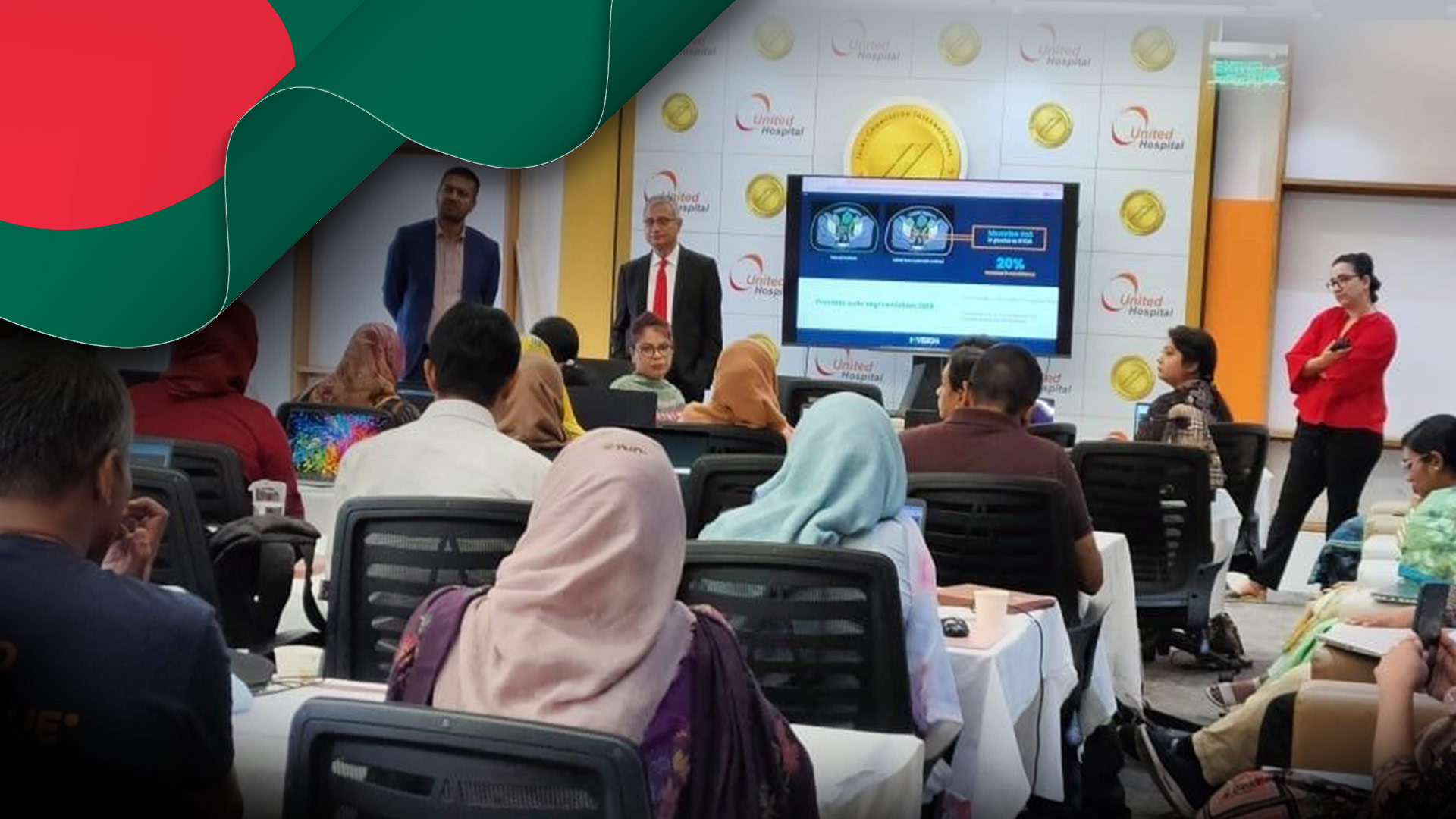
Ahead of the BICC conference, we hosted a pre-congress AI-contouring workshop at United Hospital. The event was made possible with the generous support of colleagues from Ahsania Mission Cancer & General Hospital, as well as respected leaders from Bangladesh, including Professors M.A. Hai and A.M.M. Shariful Alam and Drs. A.F.M. Kamal Uddin and Mostafa Aziz Sumon; and, from the United States, Prof. M. Saiful Huq of the University of Pennsylvania.
The workshop attracted over 40 young oncologists and several surgeons, all eager to learn about AI’s current capabilities and future potential in radiotherapy planning. Their curiosity, thoughtful questions, and constructive discussions created an atmosphere full of energy and promise. It was inspiring to see so much passion toward embracing innovation for the benefit of patients.
Exploring AI in Radiotherapy at BICC 2025
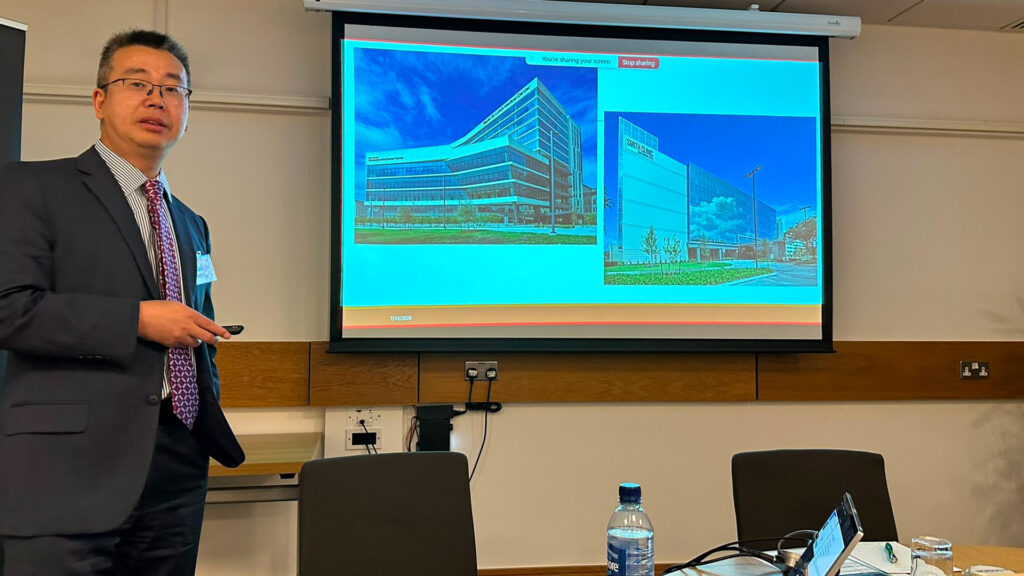
During the conference itself, Mahmudul delivered a presentation on the role of AI in radiotherapy as part of the “AI & Digital Oncology” session. The moment was made even more meaningful by the presence of several Bangladeshi teams showcasing their own advances in AI for oncology. Their work—addressing complex challenges with creativity and determination—highlighted that these efforts are not happening in isolation but are part of a growing, collaborative ecosystem shaping the future of cancer care in Bangladesh.
This collective enthusiasm echoed what we observed throughout the trip: the country’s radiotherapy community is actively seeking ways to advance, modernise, and expand access to high-quality cancer care, even in the face of well-known infrastructural and resource challenges.
From Mahmudul’s perspective as CEO, the experience felt especially meaningful: “Standing on that stage at BICC 2025, speaking about AI in radiotherapy to medical professionals from Bangladesh, I felt a mix of pride, responsibility, and something deeply personal. Bringing our technology home underscored that Bangladesh can be a place where innovation begins, and speaking to clinicians who carry the emotional weight of cancer care reminded me that I was there to serve, not impress. Returning as the CEO of a medical AI startup felt like fulfilling an unwritten promise, and sharing the stage with fellow Bangladeshi innovators only strengthened that sense of purpose. I left the session grateful, grounded, and more determined than ever to ensure our technology truly supports the patients and clinicians who inspire it.”
AI Integration in Clinical Practice: Visits Across Leading Oncology Centres
One of the highlights of the trip was visiting Ahsania Mission Cancer & General Hospital, which is preparing to become the first centre in Bangladesh to deploy AI-based auto-contouring clinically. Mahmudul and I were warmly welcomed by the radiotherapy department and met with Dr. Nowshin Hossain, Dr. Jannatul Ferdause, and Dr. Aditi Paul Chowdhury, whose commitment to adopting AI auto-segmentation for the benefit of their patients was deeply encouraging. Their insights reaffirmed how impactful close collaboration between technology developers and clinicians can be.
Beyond Ahsania, we were invited to several leading oncology departments, including Bangladesh Medical University (BMU) Hospital, LabAid Hospital, and NICRH. At BMU, we had the opportunity to learn about their well-organised residency programme, which is shaping the country’s next generation of oncologists. Prof. Syed Akram Hussain kindly invited me to deliver a talk during their “Evidence-Based Precision Oncology: Bridging Education, Research and Clinical Practice” meeting.
In that session, I shared real-world insights from MVision AI users across the globe and emphasised the importance of a symbiotic relationship between clinicians and AI—where technology enhances clinical practice but never replaces expert judgement. The audience’s curiosity was exciting, yet there was also a cautious awareness: many participants wanted to understand not just what AI can do, but also its limitations, how it integrates with human oversight, and the risks of over-reliance. The questions were practical and insightful, reflecting a desire to adopt AI responsibly.
Looking Ahead
Leaving Bangladesh, I felt a strong sense of admiration for the radiotherapy community we had met. Their readiness to innovate—despite significant systemic challenges—shows how impactful supportive technologies can be when directed toward the right needs.
At MVision AI, we remain committed to being part of that progress. AI cannot replace clinicians, but it can help bridge gaps faced in low- and middle-income countries (LMICs) by:
- reducing routine workload in understaffed departments
- improving consistency where experience levels vary
- enabling faster planning in high-volume centres and
- supporting training and education for early-career clinicians.
Our visit strengthened our belief that meaningful progress comes from collaboration—pairing local ambition with tools that genuinely support clinical teams. We look forward to deepening our partnerships in Bangladesh and contributing to a future where efficient, precise, and accessible radiotherapy becomes a reality for more patients.
References
- Islam, M.R., Siddiqua, S.M., Mina, S. et al. Cancer care in Bangladesh: an urgent need for strategic intervention and comprehensive reform. Discov Health Systems 4, 96 (2025). https://doi.org/10.1007/s44250-025-00283-x
- Hussain, S. M. (2013). Comprehensive update on cancer scenario of Bangladesh. South Asian Journal of Cancer, 02(04), 279–284. https://doi.org/10.4103/2278-330x.119901